
The Search for the Enemy Within
Pamela's WarThis flow follows local suspicion from ambiguous observations to internment and later confirmation of possible espionage.
increasing Bearing strength in each event
 decreasing
Bearing strength in each eventdecreasingGerman Customers
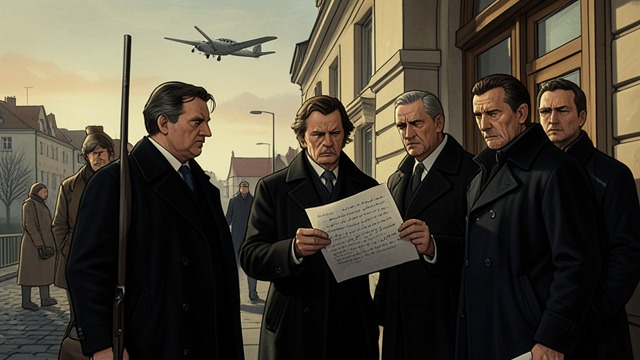
German Customers
Familiar Strangers
A group of men visits The Woodman Hotel, speaks German, and claims residence at a large nursing home nearby. Sidney Wheeler recognizes the language from the Battle of the Somme.
Old War Resurfaces
His greeting is charged by memories of World War I. Former enemies now occupy a civilian landscape, making neutrality feel impossible.
The bar becomes a listening post.
Pamela Investigates
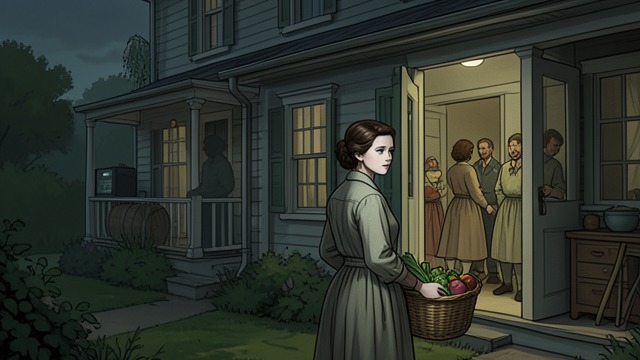
Pamela Investigates
An Innocent Cover
Pamela buys potatoes and carrots at the large house while counting people inside. Her age makes her an unlikely observer.
Limited Knowledge
She is eventually forbidden to return to the house and cannot determine what the crowd means. Her report offers more anxiety than certainty.
Childhood curiosity is recruited into national surveillance.
Curtain Signals
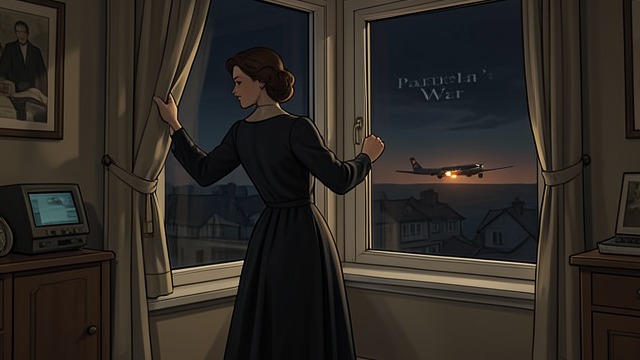
Curtain Signals
Suspicious Movement
A German maid repeatedly opens and closes curtains as aircraft approach. In blackout conditions, the behavior appears capable of guiding enemy bombers.
Arrest Follows
Warnings fail, so authorities jail her. The community interprets repeated ambiguity as proof of hostile intent.
The blackout turns domestic gestures into military evidence.
Internment Convoy
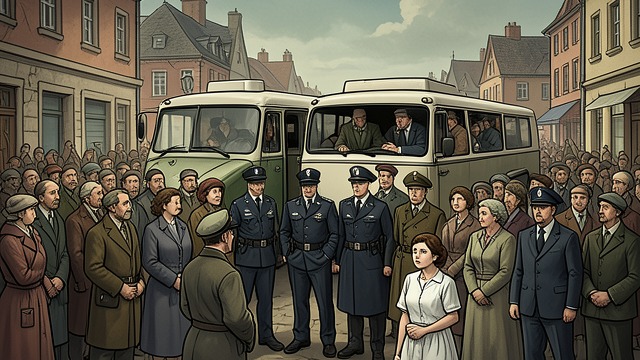
Internment Convoy
Public Accusation
Police arrive at the nursing home after Sidney Wheeler reports his suspicions. Villagers gather to jeer as German residents are driven away.
Moral Unease
Pamela later recognizes that some may have been innocent or Jewish refugees hostile to Adolf Hitler. Yet wartime law treats nationality as danger.
The crowd’s certainty becomes the book’s sharpest portrait of fear.
Transmitters Reported
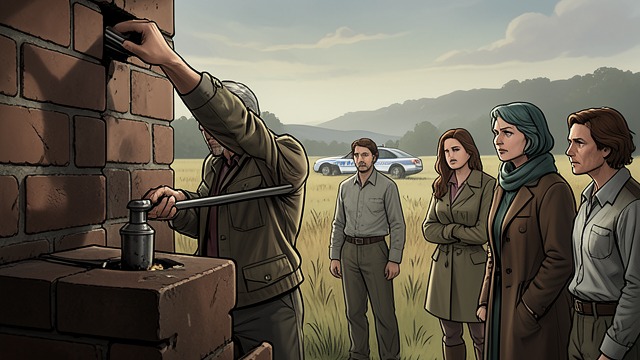
Transmitters Reported
A Later Testimony
At a Land Army reunion, Pamela hears that a policeman once found radio transmitters hidden in chimneys at the nursing home.
Unresolved Judgment
The discovery suggests that local paranoia may have contained genuine intelligence. It does not erase the injustice of collective suspicion.
History leaves the community with evidence but not moral simplicity.
several months after war begins
early wartime months
during the blackout
shortly after the investigation
many years after the war
